
TL;DR:
- Gen Z and Millennials are driving a tactile obsession with gummy textures across fashion, beauty, tech, and food
- Jelly blush searches jumped 130%, gummy bears aesthetic rose 50%, and probiotic gummy market hits $1.97 billion by 2030
- This is like a sensory rebellion against digital fatigue and a nostalgia play for physical satisfaction
- The trend spans elastic cheek tints, rubberized phone cases, 3D bouncy jewelry, and spring-back probiotic treats
- ASMR culture and the psychology of tactile comfort fuel this movement toward “touchable” everything
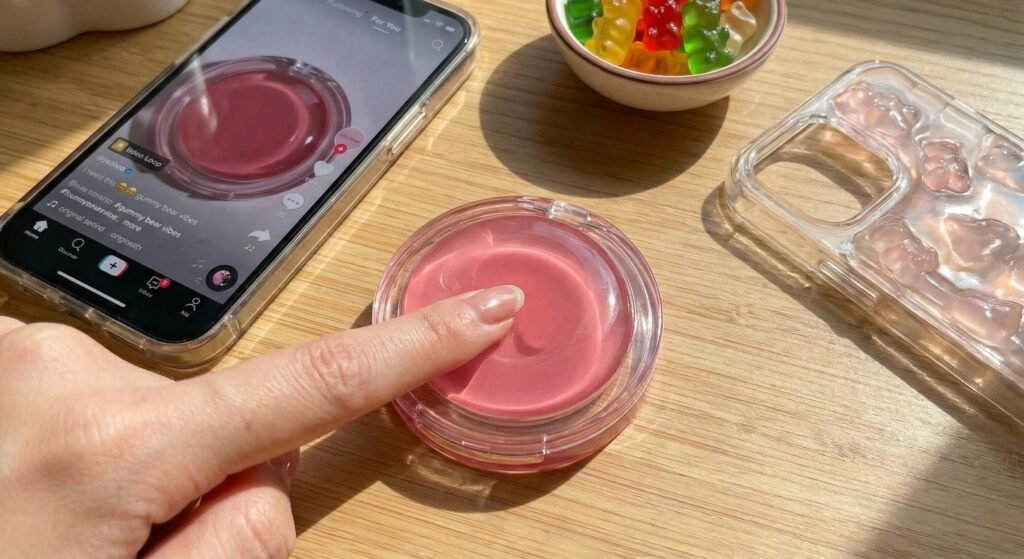
You’re scrolling through your feed when something makes you stop. Not another perfectly filtered photo of a cute puppy that make you “Awwww”….nope. It’s a video of someone pressing their finger into a translucent pink cheek tint, watching it bounce back like a miniature trampoline. Even worse if it’s in slow motion. The comments, of course, contain the classics: “I need this”, “”I want it!, “The texture is chef’s kiss,” “This is giving me childhood gummy bear vibes.”
Welcome to 2026, where everything’s gone full gummy.
And no, this isn’t your childhood candy aisle having a moment (though that’s part of it). This is Pinterest’s forecast showing searches for “jelly blush” skyrocketing by 130%, “gummy bears aesthetic” climbing 50%, and “jelly candy aesthetic” doubling with a 100% increase.
This screams: people want to touch, bounce, and squish their world….which is kind of the opposite of what I tell my kid: don’t touch everything you see!
When Touch Became the New Luxury
Gen Z craves tactile experiences because they grew up in a world where everything exists behind glass. They swipe, tap, and scroll and click through life without feeling much of anything real.
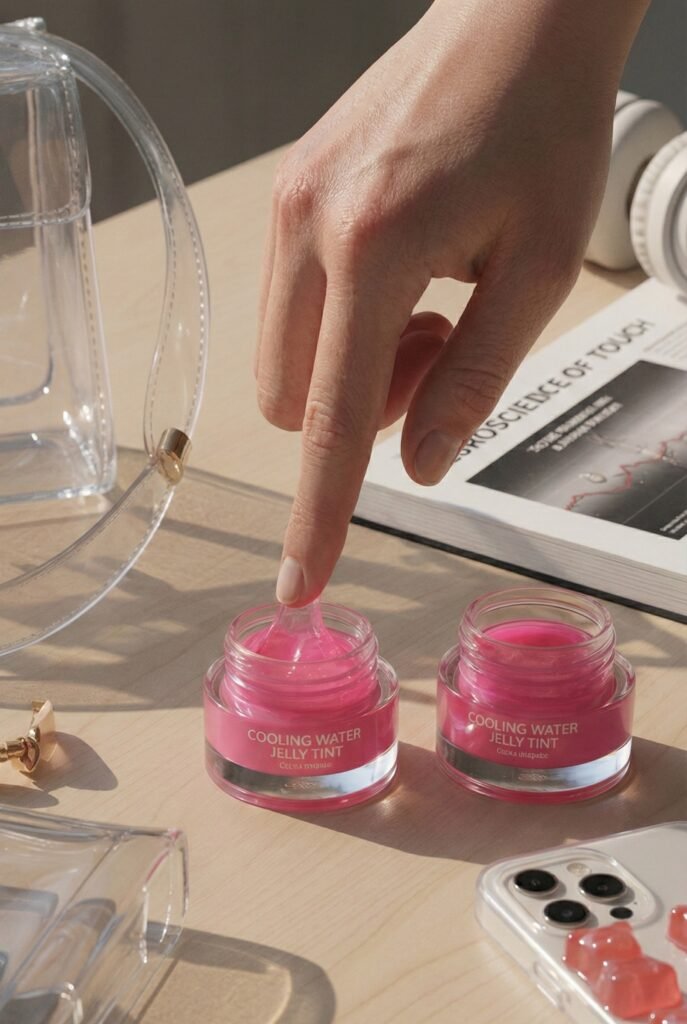
So, Milk Makeup’s Cooling Water Jelly Tint launched in February 2024, capitalized on this trend and and sparked a 1,300% year-over-year growth in jelly blush interest. That’s because people could feel it working. The cooling sensation. The jiggly texture. The satisfying bounce-back when you squish your finger into it.
Research from the NIH confirms that tactile engagement through repetitive, rhythmic motions helps the brain self-regulate and reduce anxiety. Translation: squeezing something squishy feels good, helps you feel better, fight stress and chill…it’s science! Or even better, its’ neuroscience!
Fidget toys work by stimulating the senses and redirecting anxious energy, and gummy textures deliver that same dopamine hit wrapped in something socially acceptable. You’re not playing with a stress ball in a meeting—you’re applying your luxe jelly blush.
Did you know? ASMR videos produce measurable physiological changes including reduced heart rate and increased skin conductance, creating both calming and activating experiences. That satisfying squish you feel when pressing gummy products? Your nervous system is literally thanking you.
The Probiotic Gummy Gold Rush
Let’s talk about what you’re eating. Or rather, chewing.
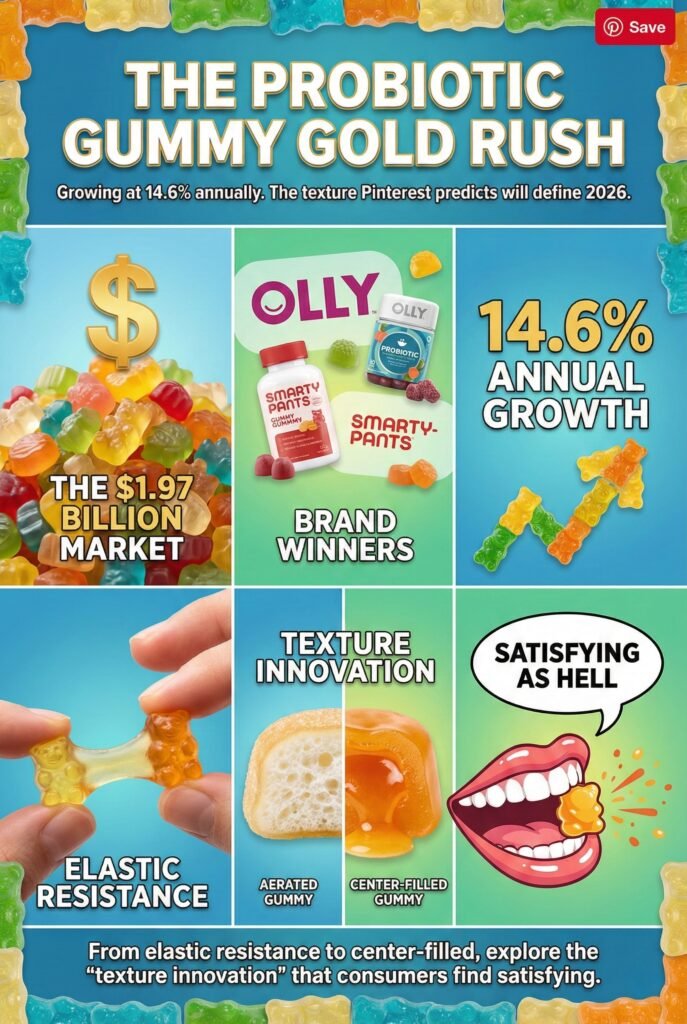
The global probiotic gummies market is projected to hit $1.97 billion by 2030, growing at 14.6% annually. These gummies deliver that spring-back bite Pinterest predicts will define 2026. Brands like Olly and SmartyPants capitalized on the pandemic’s wellness wake-up call, but they’re winning because their products feel different in your mouth. That elastic resistance. The way they require just enough jaw work to feel substantial but melt quickly enough to feel indulgent.
Manufacturing trends show rising demand for “aerated gummies” and “center-filled gummies” specifically for their unique mouthfeel and interactive appeal. The industry calls it “texture innovation.” Consumers call it satisfying as hell.
Here’s the table that tells the real story:
| Gummy Search Term | Growth Rate | Primary Demographic |
|---|---|---|
| Jelly blush | +130% | Gen Z, Millennials |
| Gummy bears aesthetic | +50% | Gen Z, Millennials |
| Jelly candy aesthetic | +100% | Gen Z, Millennials |
| Agar agar | +35% | Gen Z, Millennials |
| Yokan (Japanese jelly) | +60% | Gen Z, Millennials |
Source: Pinterest internal data, September 2023-August 2025
Rubberized Everything: When Your Phone Case Gets Bouncy
Your accessories are going squishy, and brands know exactly why.
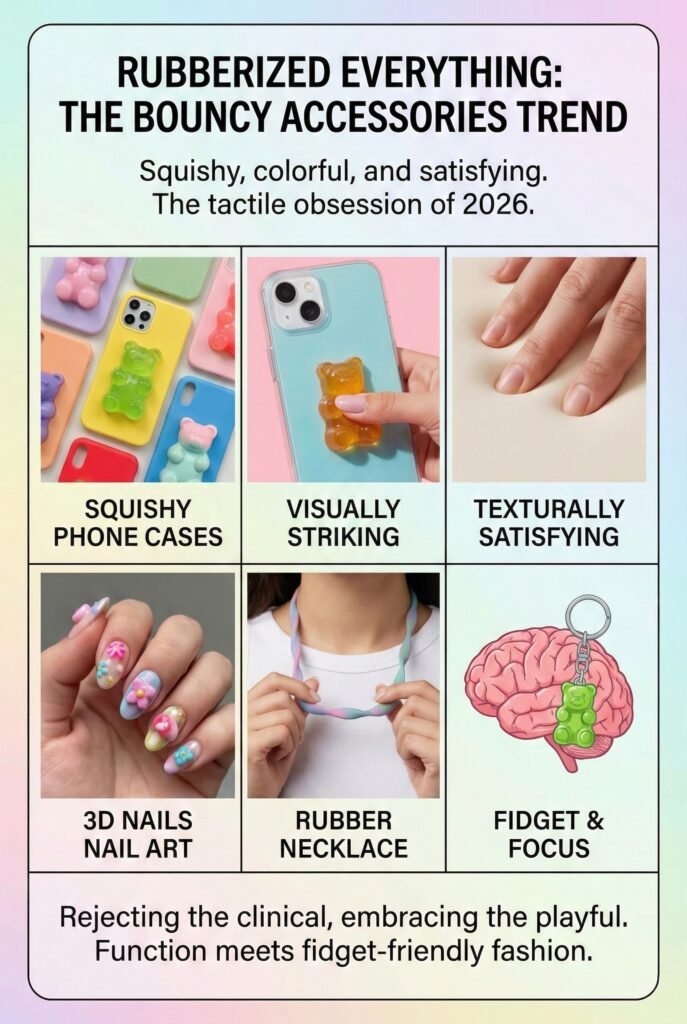
Searches for rubberized phone cases are climbing as people reject the hard, clinical feel of standard plastic and polycarbonate (I do admit that my iPhone still has an old style polycarbonate black cover!). But, that said: silicone cases have serious drawbacks including becoming slippery when hands get oily or sweaty, and being more prone to damage despite their soft feel. The Gimme Gummy trend kida of addresses this issue by using (mostly) premium elastomer materials that deliver on texture and still keep your phone safe.
Manufacturers are creating bold, colorful gummies with multi-color and 3D designs specifically to enhance shareability on platforms like TikTok and Instagram. The same principle applies to phone accessories. Gen Z doesn’t want just functional—they want visually striking and texturally satisfying. That bendy phone case needs to photograph well while delivering that squeeze-it-in-your-palm satisfaction.
Nail art follows the same playbook. Rubberized finishes create dimension that catches light differently than traditional glossy or matte. 3D jewelry is becoming the next tactile obsession because it invites interaction. And that perfectly targets the ADHD fueled millenials and Gen-Zers who can now fidget with it, rotate it, and play with its weight.
The Japanese Connection: Yokan’s Quiet Influence
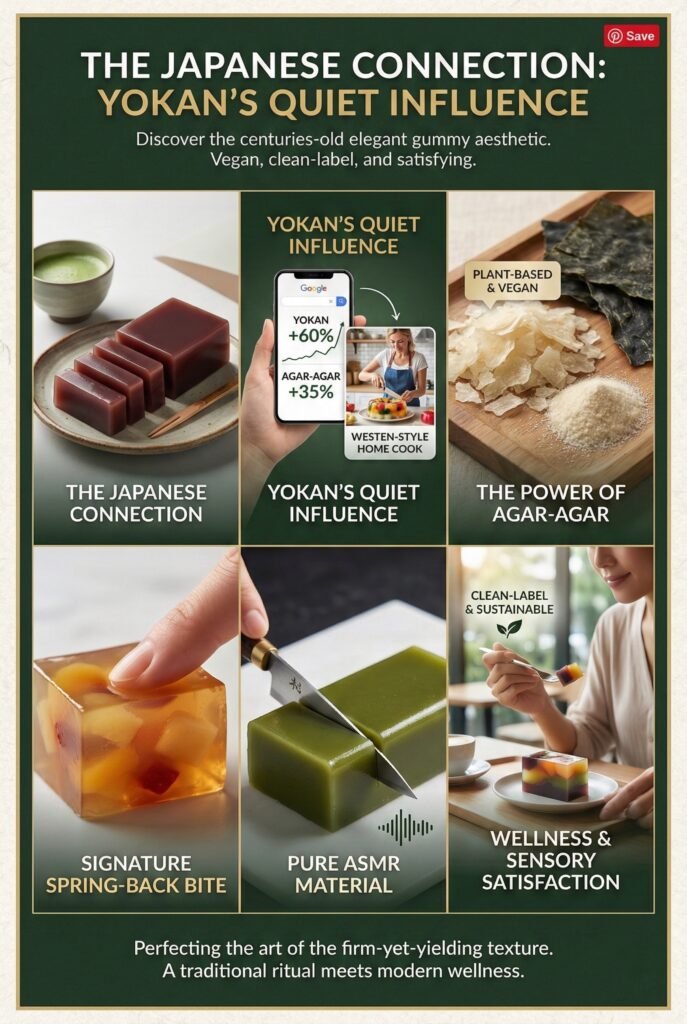
While American consumers discover jelly blush, Japan’s been perfecting the gummy aesthetic for centuries through yokan. Yokan is a traditional dessert made with agar-agar that creates an elegant, firm-yet-yielding texture. And it’s quite yummy too!
Searches for yokan jumped 60%, and agar-agar climbed 35% as Western audiences discover these plant-based gelling agents. Agar-agar is derived from seaweed and sets at room temperature, creating that signature spring-back bite. It’s vegan. It’s clean-label. It’s got texture integrity that gelatin can’t match.
The clean label movement emphasizing non-GMO, organic, and vegan options drives market growth, and agar-agar sits at the intersection of wellness, sustainability, and sensory satisfaction. Beauty brands caught on fast. Food manufacturers followed. Now home cooks are experimenting with making their own translucent treats.
Did you know? Yokan is traditionally served in block shapes, sliced, and paired with green tea. The ritual of cutting through that smooth surface, hearing the gentle resistance, then watching it hold its shape perfectly? Pure ASMR material.
Why Gen Z Can’t Stop Squishing Things
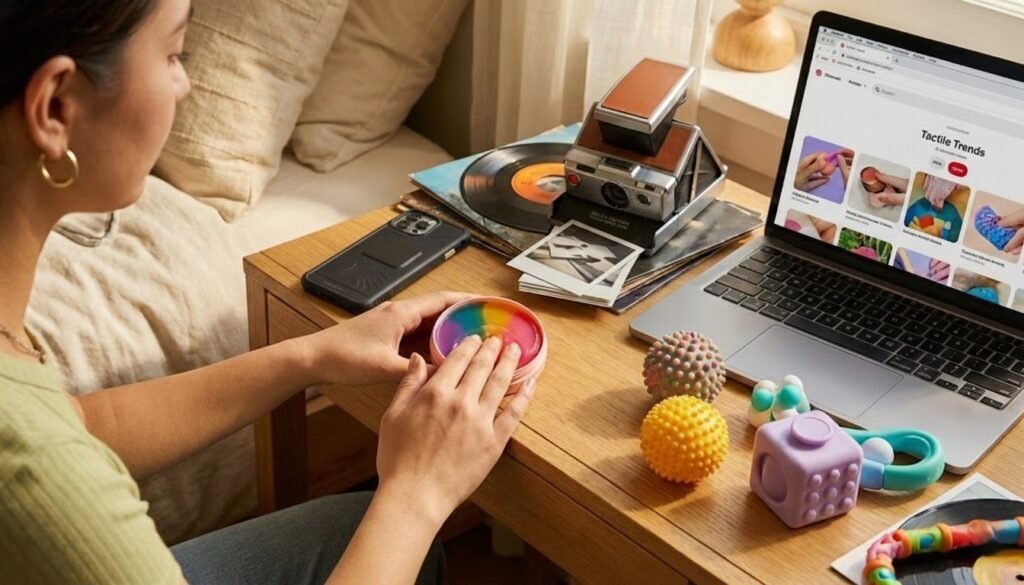
Let’s dig into the psychology that mainstream trend reports skip.
Gen Z seeks tactile and low-tech experiences in a digital-saturated environment, showing renewed interest in flip phones, instant cameras, and vinyl records. They’re drawn to the tactile appeal of dials and buttons—of interacting with something that feels solid, more real.
This generation grew up tapping glass screens. Everything responded the same way: a haptic buzz, maybe a click sound. No variation. No texture. No memory of how different materials feel when you interact with them. So when they encounter something bouncy, elastic, or yielding? It registers as novel. Special. Worth sharing.
People with anxiety engage in repetitive behaviors like nail-biting or pen-clicking as stress relief, and fidget toys offer healthier alternatives by channeling nervous energy through tactile engagement. Gummy products become socially acceptable fidget tools. You can touch up your jelly blush on Zoom without anyone thinking twice. But you’re actually self-soothing through sensory stimulation.
The numbers back this up: TikTok videos reviewing Milk Makeup’s Jelly Tint showed 8 out of 10 creators expressing excitement and curiosity, with #jellyblush accumulating 756.8K views. Numbers don’t lie!
What Brands Are Missing (And What You Should Know)
Most companies see “gummy trend” and slap translucent packaging on their products. They miss the point entirely.
The opportunity sits at the intersection of three forces:
1. Sensory Nostalgia Without Childishness
Gen Z loves nostalgia marketing despite their digital-native identity, but they want elevated versions. Not literal gummy bears—gummy bear inspiration applied to luxury goods. Think translucent beauty products that recall childhood candy without infantilizing the experience.
2. Instagram-Ready Meets Functionally Superior
Social media drives demand for bold colors, unique shapes, and multi-color layers that enhance shareability. But products still need to perform. Layered gummies with multiple ingredients and fast-dissolving formats for quicker absorption represent manufacturing evolution.
3. Wellness Integration
Brands create dual-purpose gummies offering both enjoyment and health benefits, with formulations including adaptogens, collagen boosters, and nootropic ingredients. The Gimme Gummy crowd wants function wrapped in form.
Here’s what smart brands do: they prototype with different elastomer grades. They test bounce-back speed. They measure how long that satisfying resistance lasts before material fatigue sets in. They study ASMR trigger points and design textures accordingly…smart.
The Darker Side Nobody Discusses

Yet, not everything is unicorns and rainbows…no matter what colors are bouncing around. We think that there are a few drawbacks that need to be addressed:
- Material waste: Elastomers and specialized polymers create recycling challenges. That bouncy phone case doesn’t break down like cardboard. Sustainability-minded Gen Z faces a conflict: they want the texture but hate the environmental cost.
- Sensory overload: When every surface bounces back at you, does the novelty wear off? Does touch become just another optimized, monetized experience stripped of authentic sensation?
- Quality disparity: Cheap gummy knockoffs flood markets. Low-grade silicone that tears easily. Jelly makeup that separates or grows mold. Silicone materials being “less dense, which gives them that super soft feel” but making them “more prone to damage” creates consumer disappointment.
The brands that win long-term solve these problems. They use bio-based elastomers. They design for disassembly and material recovery. They maintain texture standards that justify premium pricing.
Where This Goes Next
The Gimme Gummy trend is just getting started. Here’s what the data suggests for late 2026 and beyond:
- Furniture and home goods: Expect rubberized handles on kitchen tools, elastic drawer liners that protect glassware while delivering satisfying pull-and-release, and countertop organizers with gummy grips.
- Wearable tech: Smartwatch bands with graduated elasticity. Earbuds with bouncy stabilizers. VR headset cushions that mold and spring back.
- Food innovation: Texture innovations like aerated gummies and center-filled options become popular for unique mouthfeel. Restaurants will experiment with agar-agar in unexpected applications—gummy garnishes, translucent desserts that photograph like jewelry.
- Medical applications: Sensory therapy tools for ADHD and autism. Occupational therapists already recommend fidget toys for individuals with ADHD, autism, and anxiety disorders to help with sensory processing. Medical-grade gummy products will follow.
The throughline? Touch becomes premium. In a world where most experiences happen through screens, anything you can physically feel, squeeze, or bounce carries disproportionate value. Gen Z and Millennials will pay more for products that deliver tactile satisfaction because sensation has become scarce.
The Real Story
Pinterest Gimme Gummy trend talks about generations reclaiming physical sensation in a dematerialized world. It’s about nostalgia-driven design choices becoming comforts that help people cope with digital fatigue. That kinetic feeling and sensorial stimulation that goes beyond a touch.
When someone presses their finger into jelly blush and it bounce back,they likely experience a moment of analog joy. A subtle release of dopamine in the brain. A brief reminder that the physical world still exists, still responds, still surprises.
Pinterest data shows Gen Z and Millennials leading this ASMR overload because they recognize what’s at stake. In fighting for gummy textures, elastic materials, and bouncy everything, they’re fighting for a world that still feels like something.
The brands that understand this won’t just sell products. They’ll sell sensation itself—one satisfying squish at a time.
We hope you found something interesting in this article, at WordPin we aim to make tools that can help your Pinterest journey, and we strive to provide relevant information that can help your journey, wherever that may bring you.